Every stakeholder runs a three-second visual test before reading a word of your document. This is the overlooked project-management skill that wins it, using only the fonts and tools your locked-down machine already has.



Every stakeholder runs a three-second visual test before reading a word of your document. This is the overlooked project-management skill that wins it, using only the fonts and tools your locked-down machine already has.

You're running this now, and no one trained you for it. A warm, jargon-free guide that turns a vague "someone has to handle this" into a project you can see, steer, and finish, in five plain steps.

You will grind three hours to level up a character but stall on your real goals. The willpower was never missing, just aimed at the wrong screen.

A teenager is not a problem to solve but a project to partner on. Here is how project management turns the chaos into real progress.

The assignment that ate your whole weekend was a project, and there's one skill, rarely taught to teens, that swaps the panic for control.
 My new project
Crafted with passion
A simple, human scale tool for the people other PM apps forgot: students writing a thesis, parents organizing a wedding, anyone trying to learn a language or launch something small. From idea to done.
Discover Tejun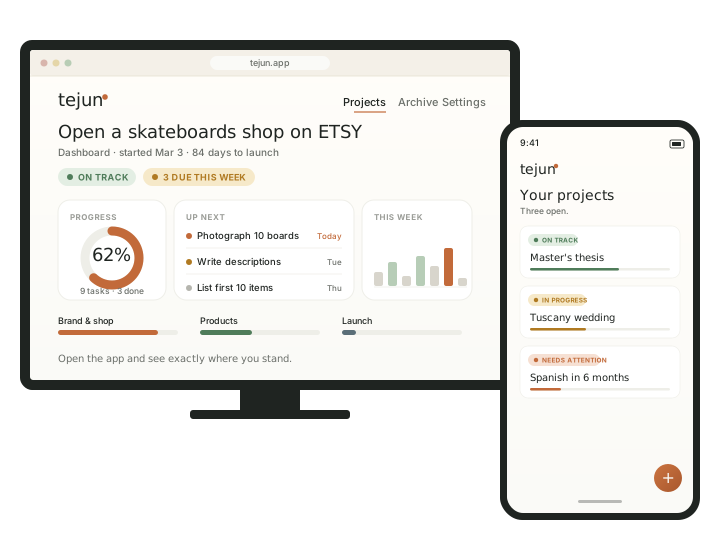
Latest 9 of 54 articles

Why AI projects fail twice, and what Luciano Floridi can teach us about the second failure I have followed Luciano Floridi's work with interest for years, long before artificial intelligence became a boardroom topic. What has always struck me is ...

The pre-mortem flips optimism on its head: assume the project already failed, then work backward to find why, while there is still time to fix it.

You do not need a 40-column risk register to manage risk well. You need four verbs and a small grid. Spot, rate, respond, review.

Household labour is invisible until it isn't. A simple Kanban board on the fridge makes the work visible, shareable, and a lot harder to silently dump on one person.

You measure burndown, velocity, and budget for the project. Here is how to turn that same instinct on yourself, and the four metrics actually worth tracking.

Project managers map stakeholders before they spend a single hour. Why not do the same for the people in your own life, and engage each of them deliberately?

Task-switching feels productive and costs you dearly. Here is why attention residue makes it expensive, and a simple way to measure your own switching tax.

Add a person to a slow team and it usually gets slower. Here is the communication math behind Amazon's two-pizza rule, and how to use it on your own work.

The urgent/important grid is a great first cut and a poor final answer. Add a third dimension, leverage, and your task list starts sorting itself.