


What minimalism actually means
Strip anything down to only the parts that matter and something surprising happens: it usually works better. That is the whole idea behind minimalism, a focus on simplicity and on using the fewest elements you can get away with. Depending on where you point it, though, the idea wears very different clothes.
In art and design it shows up as simple forms and shapes, a limited color palette, and an almost stubborn refusal to decorate. There is no ornamentation getting in the way, and the result carries a sense of purity, clarity, and simplicity, full of space and openness. In architecture the same instinct becomes clean, modern lines and a functional aesthetic, simple geometric forms drawn from a limited palette of materials, function placed firmly ahead of flourish. In every one of these settings the move is the same: take things away until what remains can breathe.
Pull minimalism into everyday life and it turns into something far more personal. It means simplifying what you own and living with fewer material possessions: decluttering your space, focusing on the essentials, reducing how much you consume, and buying only what is genuinely necessary. It is usually tied to a more mindful and intentional way of living. People who embrace it tend to trade objects for experiences and relationships, spending their time and energy on the activities that actually bring joy and fulfillment, and cultivating the handful of connections that mean the most rather than accumulating things that just fill shelves.
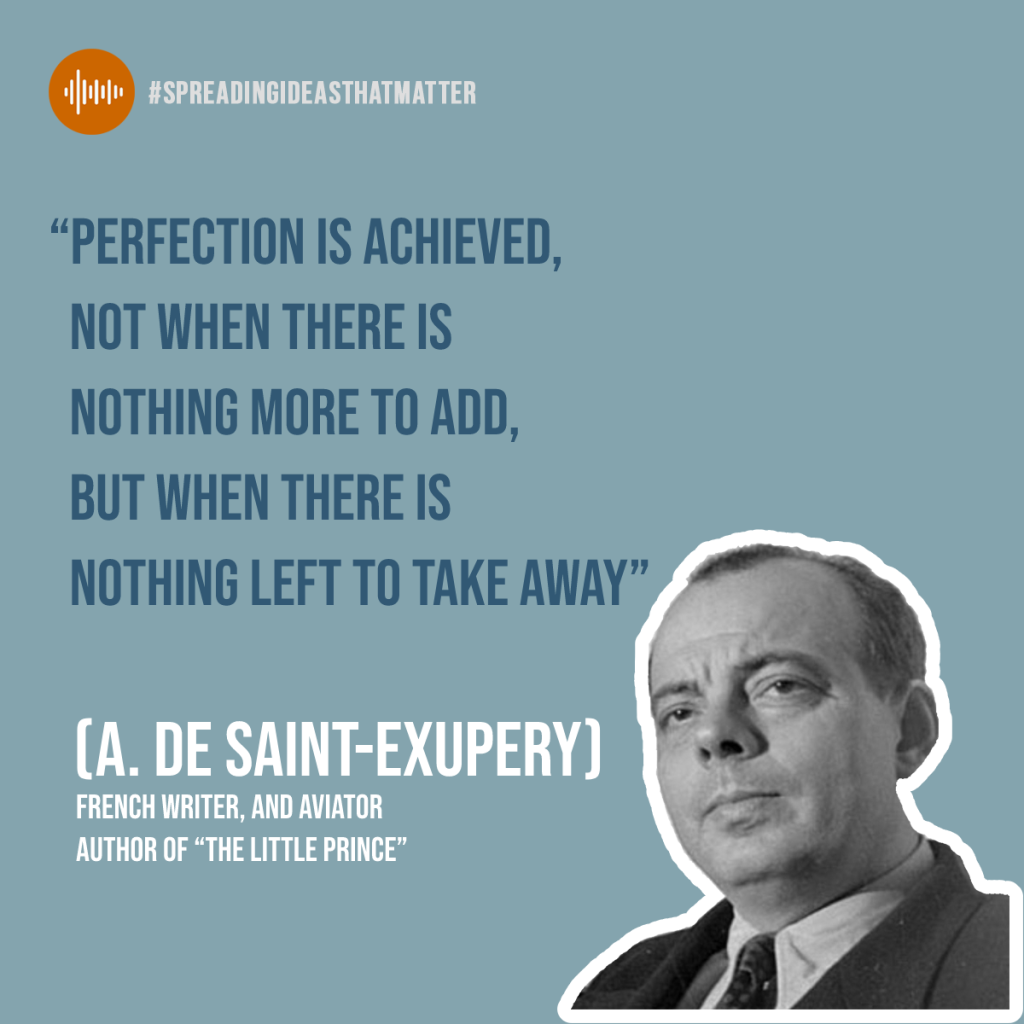
Antoine put it best: perfection is not reached by adding more, but through a steady process of simplification and reduction. The pursuit of something excellent, in other words, is mostly the work of stripping away what is unnecessary until only the essential is left standing. That single notion, that you arrive at the goal through subtraction rather than addition, is the heartbeat of everything that follows.
How minimalism crept into my project management
A few years ago I embraced minimalism in my own life after stumbling onto the blog of Leo Babauta. Around the same time, my family started organizing the house around the methods of Marie Kondo. The adoption was genuinely challenging at first, the kind of change that feels uncomfortable before it feels freeing, and within a few months it had become a real life-changer. We kept less, we decided faster, and the constant low hum of clutter and obligation that fills most homes started to quiet down. What I did not expect was how fast all of that would leak out of the house and into my work. The same questions I had been asking about possessions, do I really need this, what is it actually for, turned out to apply just as cleanly to tasks, tools, meetings, and resources.
As a consequence of its impact on my life, I started to adopt a minimalist approach not only in my personal environment but also in the way I run projects.
Giovanni Toccu
The principles that move the needle
Minimalist project management is not a single trick. It is a set of habits that all point the same way: identify what is essential, then let go of everything that is not. None of them is dramatic on its own. The power comes from applying them consistently, on every project, until trimming the excess becomes the default rather than a special effort. Here are the ones I lean on.
Focus on the essentials. The first move is always subtraction. I ask what the project truly needs and let the rest fall away. Building a new software application, I scope the core features that deliver the functionality people actually want and refuse the extras, the bells and whistles that look impressive in a kickoff deck and quietly devour the budget later. Staying ruthless here keeps the work on track and stops resources from bleeding into things nobody will ever miss.
Simplify the scope. I fix the real objective first, then keep only the goals and deliverables that serve it. A marketing campaign built around brand awareness or driving sales does not need a dozen side objectives bolted on; anything that is not directly tied to those targets gets cut, so the team can pour its energy into the goals that actually define success.
Use minimal resources. A project should run on the resources it genuinely requires, never overloaded with extras. For a new website, I focus on the core features needed to deliver the desired functionality and drop any additional modules that are not strictly necessary, because every extra one is a recurring cost in money, maintenance, and attention that somebody eventually pays.
Streamline processes. Most workflows carry steps that exist only because someone once added them and nobody ever removed them. Delivering a dataset, for instance, I would rather generate and validate the data through a single digital tool that reviews and approves it than march it through several manual rounds of review and sign-off that each add days and nothing else. Cutting redundant steps is often where the biggest, quietest efficiency gains hide.
Use simple tools and techniques. I prefer straightforward tools over elaborate systems. To track a project timeline I will reach for a simple Excel document long before an expensive, complex tool like Microsoft Project, whose steep learning curve and required training frequently cost more than the visibility they buy. A tool should save time, not turn into a project of its own.
Emphasize efficiency. For every task I ask what the most efficient and effective method really is, and I am willing to drop any approach that is not strictly necessary. When it comes to creating and distributing marketing materials, lightweight digital tools or a well-chosen outsourcing partner usually beat a bloated in-house process, and the work lands on time and within budget. Efficiency here is not about rushing; it is about removing the friction that sits between the team and the outcome.
Use clear communication. Information should travel in concise, plain language through the few channels that matter. For a new product I convey its key features and benefits directly to the marketing team and to potential customers, rather than flooding everyone across every platform until the signal drowns in noise.
Use agile principles. Minimalist project management leans naturally on agile: iterative development and frequent feedback. I split a software build into small chunks of work delivered in short increments, checking in often so course corrections happen early and cheaply instead of surfacing at the end where they are painful and expensive to fix. The approach stays flexible and adapts as requirements change.
Emphasize flexibility. I stay ready to modify the plan when reality shifts. On a project to deliver a medical data stream, the client's backend technology or business scope can change mid-flight, and I have to adapt the format of the data or the specific fields as the delivery progresses, keeping the project on track and the stakeholders' needs met.
Focus on results. In the end the point is to deliver the goals, not the paperwork. I keep coming back to the actual objective of the project and ask whether the next hour of effort moves us toward it. For a new product, what counts is shipping its key features and benefits and putting them in front of the people who need them, not getting bogged down in unnecessary details or process for its own sake. Process is supposed to serve the result, and the moment it starts serving itself, it is the first thing on the chopping block.
What isn't there doesn't break.
Anonymous
Henry Ford got there long before "less is more" became a slogan on every design blog. He was the first to really theorize the idea, and he said he had always strived to produce with the minimum of waste, both in raw materials and in labor. The principle, in other words, is a good deal older than the buzzword, and it has been quietly earning its keep on factory floors and in project plans ever since.
The minimalist project triangle
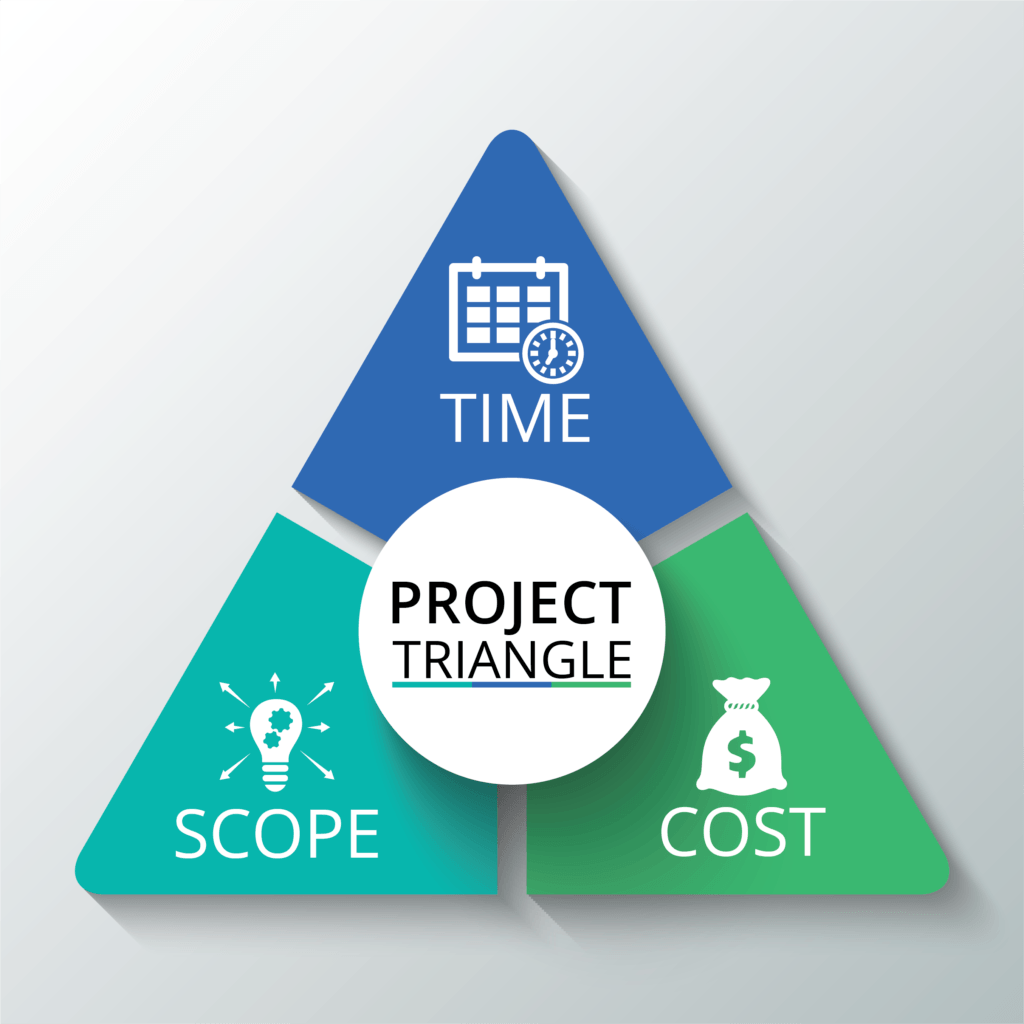
The classic constraints triangle in project management stands on three legs: cost, time, and scope. Minimalism is the discipline that keeps all three in check at once, so you can deliver the best quality possible instead of trading one corner away to rescue another.
| Constraint | How a minimalist approach protects it |
|---|---|
| Cost | Cutting unnecessary tasks, simplifying requirements, and reducing complexity all mean fewer mistakes and cheaper fixes, while using fewer materials, tools, and people lowers the bill directly. The savings add up fast. |
| Time | Eliminating non-essential activities and focusing on the most essential requirements leaves less to do and fewer errors to correct, so the work simply finishes sooner. |
| Scope and quality | Streamlining processes and using fewer resources reduces complexity and keeps the project on track, holding the end result at the quality level you actually promised. |
There is a catch worth naming out loud. Cutting tasks and resources only works when you cut the right ones. Strip away something the project genuinely depends on, or something a stakeholder explicitly asked for, and minimalism curdles into negligence. So I weigh every removal twice: once against the goals of the project, and once against the specific requirements and expectations of the people who will have to live with the result.
Done well, the payoff is real, and the three corners reinforce each other rather than fighting. A minimalist approach saves both time and money, increases efficiency, and keeps the focus on the elements that matter most. It shines brightest on projects that are resource-constrained or running against tight deadlines, where there is simply no room to waste effort on anything that does not pull its weight. By simplifying requirements and dropping unnecessary tasks, you also lower the risk of errors and improve the quality of what you deliver, since a leaner project is an easier one to keep on track.
Every cut you make in one corner tends to relieve the other two. Drop a redundant approval step and you save time, you save the labor cost of running it, and you remove a place where the deliverable could quietly go wrong. Pick a simpler tool and you save the licensing fee, the training hours, and the confusion that complex software breeds. This is why minimalism is not just a cost lever or a speed lever; it is a quality lever as well. Fewer moving parts means fewer things that can break, fewer handoffs that can drop the ball, and a clearer line of sight from the work being done to the result the stakeholders are waiting for.
A minimalist work style was never about doing the minimum. It is about optimizing every corner of the workday so nothing leaks away in wasted time or resources, and what you finally hand over is the best version of the work, with all the bells and whistles trimmed clean off.